



Château Canon La Gaffelière
Premier Grand Cru Classé / AOC Saint-Émilion Grand Cru
Présentation
Situé en pied de côte au sud du village médiéval de Saint-Emilion, le terroir de Château Canon La Gaffelière est composé de sols argilo-calcaires et argilo-sableux, très filtrants, particulièrement réceptifs à la chaleur.
Du fait de la nature des sols, l’encépagement présente une structure atypique au regard de l’appellation, caractérisée par un équilibre parfait entre Merlot et Cabernet. Sur ce terroir, où la maturation s’opère très précocement, les Cabernet s’épanouissent remarquablement, apportant à l’opulence des Merlot une puissance et une complexité aromatique qui fondent l’élégance et la finesse naturelles des vins de Canon La Gaffelière.
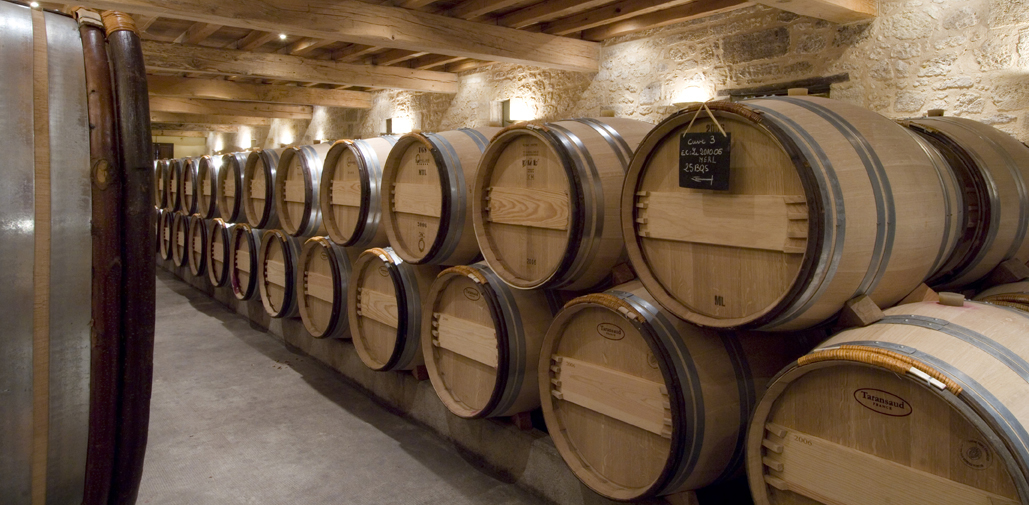
Prolongeant la gestion parcellaire, la structure d’accueil de la cuverie offre la possibilité de vinifier des lots parfaitement homogènes. Les différentes phases de la vinification s’opèrent lentement, sans montée excessive en température, exprimant ainsi le meilleur de la vendange. L’élevage, effectué sur lies fines, permet de faire ressortir les qualités intrinsèques du vin en offrant à chaque entité le bénéfice d’un traitement individualisé. Les manipulations et les interventions sont drastiquement réduites, adaptées à la typicité de chaque millésime.
Le vin
Certifié Agriculture Biologique, Château Canon La Gaffelière livre des vins racés, remarquablement structurés, complexes, purs, et toujours élégants.
Vignoble
- Terroir : Argilo-calcaire. Argilo-sableux en pied de côte.
- Surface en production : 19,5 ha
- Encépagement : 50 % Merlot, 40 % Cabernet Franc, 10% Cabernet Sauvignon
- Âge moyen du vignoble : 50 ans
Elaboration
- Vendanges : Manuelles, en cagettes. Double tri avant et après éraflage. Pas de foulage. Arrivée de la vendange par tapis convoyeur.
- Vinification : En cuves bois thermorégulées de 28 à 35 jours selon les millésimes. Extraction par pigeage pneumatique.
- Fermentation malolactique et élevage : En barriques neuves (jusqu'à 80 %) sur lies fines. Collage et filtration si nécessaire, selon les millésimes.
- Durée de l’élevage : 15 à 18 mois selon les millésimes.
Les millésimes

2021
Certifié Agriculture Biologique par FR-BIO-10
Période de vendanges
28.09.2021 – 14.10.2021
Rendement
30 hl/ha
Vinification
En cuves bois. Extraction par pigeage pneumatique. Cuvaison : 29 jours.
Elevage
En barriques neuves (40 %), sur lies fines, pendant 15 mois. Pas de collage.
Mise en bouteille
Au château, les 31 mai et 1er juin 2023.
Assemblage
35% Merlot, 45% Cabernet Franc, 20% Cabernet Sauvignon
Degré
13,5%
2020
Certifié Agriculture Biologique par FR-BIO-10
Période de vendanges
17.09.2020 – 29.09.2020
Rendement
32,5 hl/ha
Vinification
En cuves bois. Extraction par pigeage pneumatique. Cuvaison : 32 jours.
Elevage
En barriques neuves (50 %), sur lies fines, pendant 16 mois. Pas de collage.
Mise en bouteille
Au château, du 11 au 13 mai 2022.
Assemblage
55% Merlot, 30% Cabernet Franc, 15% Cabernet Sauvignon
Degré
13,5%
2019
Certifié Agriculture Biologique par FR-BIO-10
Période de vendanges
19.09.2019 – 07.10.2019
Rendement
51 hl/ha
Vinification
En cuves bois. Extraction par pigeage pneumatique. Cuvaison : 35 jours.
Elevage
En barriques neuves (60 %), sur lies fines, pendant 16 mois. Pas de collage.
Mise en bouteille
Au château, du 3 au 6 mai 2021.
Assemblage
49% Merlot, 39% Cabernet Franc, 12% Cabernet Sauvignon
Degré
14 %
2018
Certifié Agriculture Biologique par FR-BIO-10
Période de vendanges
17.09.2018 – 04.10.2018
Rendement
35 hl/ha
Vinification
En cuves bois. Extraction par pigeage pneumatique. Cuvaison : 35 jours.
Elevage
En barriques neuves (50 %), sur lies fines, pendant 16 mois. Pas de collage.
Mise en bouteille
Au château, du 25 au 27 mai 2020.
Assemblage
50% Merlot, 35% Cabernet Franc, 15% Cabernet Sauvignon
Degré
14,5%
2017
Certifié Agriculture Biologique par FR-BIO-10
Période de vendanges
18.09 – 10.10.2017
Rendement
16 hl/ha
Vinification
En cuves bois. Extraction par pigeage pneumatique. Cuvaison : 30 jours.
Elevage
En barriques neuves (55 %), sur lies fines, pendant 15 mois. Pas de collage.
Mise en bouteille
Au château, du 16 au 17 mai 2019.
Assemblage
60 % Merlot, 30 % Cabernet Franc, 10 % Cabernet Sauvignon
Degré
13,5%
2016
Certifié Agriculture Biologique par FR-BIO-10
Période de vendanges
26.09 – 15.10.2016
Rendement
42 hl/ha
Vinification
En cuves bois. Extraction par pigeage pneumatique. Cuvaison : 32 jours.
Elevage
En barriques neuves (60 %), sur lies fines, pendant 17 mois. Pas de collage.
Mise en bouteille
Au château, du 4 au 7 juin 2018.
Assemblage
55 % Merlot, 35 % Cabernet Franc, 10 % Cabernet Sauvignon
Degré
14,5 %
2015
Certifié Agriculture Biologique par FR-BIO-10
Période de vendanges
19.09 – 06.10.2015
Rendement
37 hl/ha
Vinification
En cuves bois. Extraction par pigeage pneumatique. Cuvaison : 30 jours.
Elevage
En barriques neuves (55 %), sur lies fines, pendant 17 mois. Pas de collage.
Mise en bouteille
Au château, du 26 au 28 juin 2017.
Assemblage
55 % Merlot, 38 % Cabernet Franc, 7 % Cabernet Sauvignon
Degré
14 %
2014
Premier millésime certifié Agriculture Biologique par FR-BIO-10
Période de vendanges
25.09 – 09.10.2014
Rendement
24 hl/ha
Vinification
En cuves bois. Extraction par pigeage pneumatique. Cuvaison : 35 jours.
Elevage
En barriques neuves (70 %), sur lies fines, pendant 17 mois. Pas de collage.
Mise en bouteille
Au château, le 1er juin 2016.
Assemblage
55 % Merlot, 37 % Cabernet Franc, 8 % Cabernet Sauvignon
Degré
13,5 %
2013
Période de vendanges
27.09 – 09.10.2013
Rendement
10 hl/ha
Vinification
En cuves bois. Extraction par pigeage pneumatique. Cuvaison : 25 jours.
Elevage
En barriques neuves (70 %), sur lies fines, pendant 15 mois. Pas de collage.
Mise en bouteille
Au château, le 15 avril 2015.
Assemblage
70 % Merlot, 25 % Cabernet Franc, 5 % Cabernet Sauvignon
Degré
14 %
2012
Période de vendanges
03.10 – 11.10.2012
Rendement
28 hl/ha
Vinification
en cuves bois. Extraction par pigeage pneumatique. Cuvaison : 32 jours
Elevage
en barriques neuves (80 %), sur lies fines, pendant 15 mois. Pas de collage
Mise en bouteille
au château, les 24 et 25 mars 2014
Assemblage
50 % Merlot 50 % Cabernet Franc
Degré
13,5 %
2011
Période de vendanges
20.09 - 26.09.2011
Rendement
33 hl/ha
Vinification
en cuves bois. Extraction par pigeage pneumatique. Cuvaison : 28 jours
Elevage
en barriques neuves (80 %), sur lies fines, pendant 15 mois. Pas de collage
Mise en bouteille
au château, les 30 et 31 mai 2013
Assemblage
60 % Merlot 32 % Cabernet Franc 8 % Cabernet Sauvignon
Degré
13,5 %
2010
Période de vendanges
05.10 – 20.10.2010
Rendement
28 hl/ha
Vinification
en cuves bois. Extraction par pigeage pneumatique. Cuvaison : 32 jours
Elevage
en barriques neuves (70 %), sur lies fines, pendant 17 mois. Pas de collage, ni de filtration
Mise en bouteille
au château, en avril 2012
Assemblage
55 % Merlot 35 % Cabernet Franc 10 % Cabernet Sauvignon
Degré
14,5%
2009
Période de vendanges
01.10 - 10.10.2009
Rendement
34 hl/ha
Vinification
en cuves bois. Extraction par pigeage pneumatique. Cuvaison : 35 jours
Elevage
en barriques neuves (90 %), sur lies fines, pendant 17 mois. Pas de collage, ni de filtration
Mise en bouteille
au Château, en avril 2011
Assemblage
55 % Merlot 35 % Cabernet Franc 10 % Cabernet Sauvignon
Degré
14 %
2008
Période de vendanges
06.10 – 22.10.2008
Rendement
24 hl/ha
Vinification
en cuves bois. Extraction par pigeage pneumatique. Cuvaison : 30 jours
Elevage
en barriques neuves (90 %), sur lies fines, pendant 17 mois. Pas de collage, ni de filtration
Mise en bouteille
au château, en mai 2010
Assemblage
55 % Merlot 35 % Cabernet Franc 10 % Cabernet Sauvignon
Degré
13 %
2007
Période de vendanges
02.10 - 11.10.2007
Rendement
32 hl/ha
Vinification
en cuves bois. Extraction par pigeage pneumatique. Cuvaison : 28 jours
Elevage
en barriques neuves (90%), sur lies fines, pendant 17 mois. Pas de collage, ni de filtration
Mise en bouteille
au Château, en Mai 2009
Assemblage
55 % Merlot 35 % Cabernet Franc 10 % Cabernet Sauvignon
Degré
13,5 %
2006
Période de vendanges
21.09 - 03.10.2006
Rendement
35 hl/ha
Vinification
en cuves bois. Extraction par pigeage pneumatique. Cuvaison 30 jours
Elevage
en barriques neuves (80 %), sur lies fines, pendant 18 mois. Pas de collage, ni de filtration
Mise en bouteille
au château, en mai 2008
Assemblage
55 % Merlot 35 % Cabernet Franc 10 % Cabernet Sauvignon
Degré
14 %
2005
Période de vendanges
26.09 – 09.10.2005
Rendement
30 hl/ha
Vinification
En cuves bois. Extraction par pigeage pneumatique. Cuvaison : 32 jours
Elevage
En barriques neuves (80 %), sur lies fines, pendant 18 mois. Pas de collage, ni de filtration
Mise en bouteille
Au château, en mai 2007
Assemblage
55 % Merlot 35 % Cabernet Franc 10 % Cabernet Sauvignon
Degré
14 %
2004
Période de vendanges
04.10 – 06.10.2004, 17.10 et 18.10.2004
Rendement
37 hl/ha
Vinification
En cuves bois. Extraction par pigeage pneumatique. Cuvaison moyenne : 30 jours.
Elevage
Fermentation malolactique et élevage en barriques neuves (80 %) sur lie fine pendant 18 mois. Pas de collage, ni de filtration.
Mise en bouteille
Au château, en juin 2006
Assemblage
50 % Merlot 45 % Cabernet Franc 5 % Cabernet Sauvignon
Degré
13.5 %
2003
Période de vendanges
15.09 – 25.09.2003
Rendement
17 hl/ha
Vinification
En cuves bois. Extraction par pigeage pneumatique. Cuvaison moyenne : 23 jours.
Elevage
Fermentation malolactique et élevage en barriques neuves (90 %) sur lie fine pendant 18 mois. Pas de collage, ni de filtration.
Mise en bouteille
Au château, en mai 2005
Assemblage
45 % Merlot 50 % Cabernet Franc 5 % Cabernet Sauvignon
Degré
13 %
2002
Période de vendanges
du 25.09.2002 au 07.10.2002
Rendement
15 hl/ha
Vinification
En cuves bois. Extraction par pigeage pneumatique. Cuvaison moyenne : 21 jours.
Elevage
En barriques neuves (90 %) sur lie fine pendant 18 mois. Pas de collage, ni de filtration.
Mise en bouteille
Au château, en mai 2004
Assemblage
70 % Merlot 25 % Cabernet Franc 5 % Cabernet Sauvignon
Degré
13.5 %
2001
Période de vendanges
01.10 - 10.10.2001
Rendement
21 hl/ha
Vinification
En cuves bois. Extraction par pigeage pneumatique. Cuvaison moyenne : 25 jours.
Elevage
Fermentation malolactique et élevage en barriques neuves (85 %) sur lie fine pendant 18 mois. Pas de collage, ni de filtration.
Mise en bouteille
Au château, en mai 2002
Assemblage
50 % Merlot 45 % Cabernet Franc 5 % Cabernet Sauvignon
Degré
13.5 %
2000
Période de vendanges
22.09 - 04.10.2000
Rendement
29 hl/ha
Vinification
En cuves bois. Extraction par pigeage pneumatique. Cuvaison moyenne : 26 jours.
Elevage
Fermentation malolactique et élevage en barriques neuves (90 %) sur lie fine pendant 18 mois. Pas de collage, ni de filtration.
Mise en bouteille
Au château, en mai 2002
Assemblage
50 % Merlot 45 % Cabernet Franc 5 % Cabernet Sauvignon
Degré
13.5 %
1999
Période de vendanges
26.09 - 04.10.1999
Rendement
22 hl/ha
Vinification
En cuves bois. Extraction par pigeage pneumatique. Cuvaison moyenne : 24 jours.
Elevage
Fermentation malolactique et élevage en barriques neuves (80 %) sur lie fine pendant 18 mois. Pas de collage, ni de filtration.
Mise en bouteille
Au château, en mai 2001
Assemblage
60 % Merlot 35 % Cabernet Franc 5 % Cabernet Sauvignon
Degré
13.5 %
1998
Période de vendanges
27.09 - 05.10.1998
Rendement
24 hl/ha
Vinification
En cuves bois. Extraction par pigeage pneumatique. Cuvaison moyenne : 25 jours.
Elevage
Fermentation malolactique et élevage en barriques neuves (90 %) sur lie fine pendant 18 mois. Pas de collage, ni de filtration.
Mise en bouteille
Au château, en mai 2000
Assemblage
50 % Merlot 45 % Cabernet Franc 5 % Cabernet Sauvignon
Degré
13.5 %
1997
Période de vendanges
22.09 – 08.10.1997
Rendement
21 hl/ha
Vinification
En cuves bois. Extraction par pigeage pneumatique. Cuvaison moyenne : 28 jours.
Elevage
Fermentation malolactique et élevage en barriques neuves (100 %) sur lie fine pendant 18 mois. Pas de collage, ni de filtration.
Mise en bouteille
Au château, en mai 1999
Assemblage
75 % Merlot 25 % Cabernet Franc
Degré
13 %
1996
Période de vendanges
05.10 - 14.10.1996
Rendement
32 hl/ha
Vinification
En cuves inox. Cuvaison moyenne : 32 jours.
Elevage
Fermentation malolactique et élevage en barriques neuves (80 %) sur lie fine pendant 18 mois. Pas de collage, ni de filtration.
Mise en bouteille
Au château, en mai 1998
Assemblage
58 % Merlot 30 % Cabernet Franc 12 % Cabernet Sauvignon
Degré
13 %